
Welcome to the First Newsletter, April 2026!
Scroll down to find all posts.
Want to know more about my local workshop, Aging Well & You: Why Fermented Foods? I have one on 5/12 and one on 6/6. Link to buy tickets May 12th are here . Scroll to first article for more details.
Looking for the first migraine post? Scroll to second article.
Looking for the second migraine post? Scroll down to third article.
Symptocoach description und/fer Coming Soon! (Scroll to bottom)
Egg Challenge under Coming Soon! (Scroll to bottom)
Fermented Foods Talk
Did you know that fermented food helps with gut health and restores good bacteria? It is crucial to thriving in our modern world, especially as we age. Yet many people don’t eat it regularly, per a 2021 Stanford study.
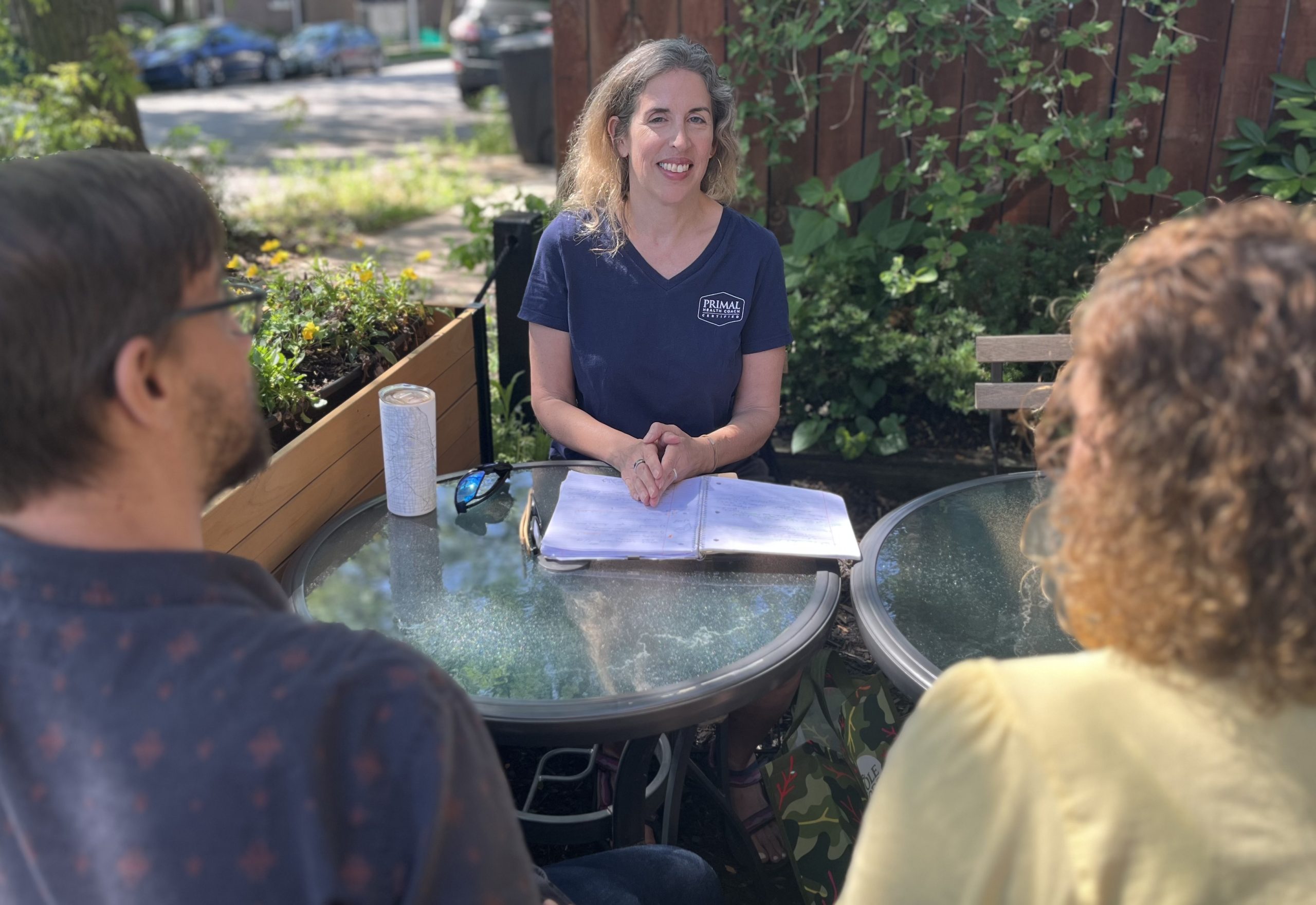
I will be giving two workshops on Tuesday, May 12 from 7-8:30pm , and Saturday, June 6 from 8:15am – 9:45am at the Eco Café , 4754 N Rockwell in Chicago. Buy tickets for May 12th online.
This is part of my series Aging Well & You series, called Why Fermented Foods? This workshop is based upon two programs I offer – My 28 day reset + gut health program, and my 30 day gut health program (click on other programs button for the latter.)
In this workshop, Aging Well & You: Why Fermented Foods, you will learn the importance of fermented foods in modern human health, especially in the aging process. There will be a tasting (optional), and in-depth discussion of what the benefits are of these powerful foods. This workshop will contain a basic overview of gut health terms. What fermented foods are, what are the benefits, along with an optional tasting. The workshop will then go into why these foods are a crucial part of supporting a healthy gut microbiome, and overall human health, especially as we age. There will be practical suggestions of day to day easy things to do, to prepare your body for aging well.
Outline of the Aging Well & You Series; Why Fermented Foods?
-Overview of gut health terms
-Overview of fermented foods and its health benefits
-Fermented foods in store optional tasting
-Aging concerns in this toxic modern world and the importance of a healthy gut.
-Easy takeaway ideas for day to day things to do to incorporate these foods into your life
(Disclaimer: I am a Certified Master Health Coach, not a doctor. This workshop is for informational purposes only and not to be construed as medical advice or diagnosis. Consult you doctor for any medical advice.)
Migraines
(Part 1)
Do you have a tendency towards Migraines? (Part 1)
Be careful of the fiber food scientists have extracted and put in food. Not all fiber is created equal – read your ingredient labels carefully.
A Cautionary Tale:
As friends and family know about me, I’ve been struggling with some really horrible migraines these past few months. I left a Christmas party early, couldn’t go to a galentine’s day event, as well as canceled many other fun social activities. It’s also been really hard to work when my brain is constantly hurting.
When I did show up to places, I couldn’t sit facing any outside light, had to wear a baseball hat (I even did so at home) and sunglasses, as any little light trigger could spark a debilitating migraine. I especially had to be careful of any peripheral light coming in at a side angle into my eyes, as that would immediately trigger pain and nausea really intensely. My photophobia (light sensitivity) has been ridiculous recently as well, and I’ve had a hard time going into any place with strong LED lights (think supermarkets and pharmacies).
As a health coach, I’m constantly learning, studying, figuring out body systems (and how they talk to each other) and diving into root causes. I was determined to figure out why these migraines were so bad and why they seemed to be worsening. Health Coach, heal thyself 🙂
Some health factors I’ve looked into:
*Genetics? Yes, I have migraines in my family, but generally had silent ones -no pain – over the years. I’ve had migraines since I was a teenager.
*Head trauma? I did have a bad concussion in my twenties but why take 30 years to make the migraines so bad? It doesn’t really make sense.
*Hormone fluctuations? Yes, definitely in my menopausal years migraines have gotten worse, more painful and more debilitating , but upping both estrogen and progesterone per my doctor’s recommendation did not seem to change anything significantly. Plus the timeline doesn’t make much sense to me.
*Inflammation? I try to live an anti-inflammatory lifestyle and diet (and all my programs are based on this approach) but have been having some gut issues recently, plus some cuts that aren’t really healing, fighting off an infection, sneezing, some asthma; minor cues in my body that shows something is off. And the migraine is a strong sign of neuroinflammation. But what’s the root cause? Something to look deeper into.
So what has changed in my lifestyle, in my diet, in my life overall in the past few months? Well, after having a few more sweet treats than normal around Christmas (it happens), I’ve been trying to cut down on sugar, mostly expressed in the form of chocolate. I’ve been exchanging the high quality milk and dark chocolate that I usually eat with a sugar free keto chocolate. This chocolate I’ve been steadily upping since Christmas to calm down the dopamine response that I was getting with regular chocolate that contained sugar.
I remember being introduced to this chocolate about a year or so ago and seeing that it had resistant starch. Cool, I’ve studied that – for my Gut Microbiome certificate – and it’s a type of carb that our small intestines don’t readily absorb. Instead, it travels to the colon where it feeds the good bacteria. This carb/starch/fiber is very important for human health, to keep the good guys happy and fermenting short chain fatty acids like butyrate. Studies show we need about 20 grams a day, so I prioritize eating that, through a combination of whole foods, and powders or sodas.
But I digress….
This resistant starch was something new for me, something I hadn’t studied. It wasn’t inulin or chicory root, FOS or Jerusalem artichoke. I did some research into this resistant dextrin, aka soluble corn fiber, when I first started eating it. I realized it maybe was feeding some bacteria that wasn’t great for my retinitis pigmentosa (degenerative eye disease I’ve been managing half my life). A mouse study showed an overgrowth in the Bacteroides Caecimuris species in the gut, a pathogenic species. This overgrowth was was directly linked to worsening degeneration of the disease, through the gut/eye axis. After I realized this, I slowed down on the chocolate for a while, then promptly forgot about my findings.
Skip forward a few years ahead: as I was reviewing this idea about maybe the resistant destrin wasn’t great for my health, I thought, let’s look into what bacteria this resistant starch is actually feeding. Good guys? Bad guys?
The first AI google dive was about how it feeds commensal (good) bacteria. And I thought ok. (The screen shot is not uploading – hmm).
Well, I’ll quote, then. Thanks, Google, for covering your butt.
“Positive Gut-Brain Signaling: Consumption of SCF (soluble corn fiber aka resistant dextrin) has been linked to increased levels of Parabacteroides, a bacteria associated with improved gut barrier function, which may reduce systemic inflammatory responses.”
But, as mentioned, I’ve studied the gut microbiome, and Parabacteroides triggered something in my brain – wait, is this a good guy?
Digging deeper –
“Studies indicate that SCF specifically increases the abundance of Parabacteroides and Bacteroides, which is shown to increase calcium absorption.”
Ok, now I’m not buying it, food scientists, as I know Bacteroides can be a pathogenic bacteria.
Digging deeper into actual sited studies –
“Research suggests a significant link between the gut bacterium Parabacteroides and migraines, with studies indicating that an elevated abundance of this genus associated with a higher risk of developing migraines.
“Positive association with migraine risk: Mendelian randomization studies have identified a statistically significant causal link. “
It goes on to say that migraine sufferers have a higher level of abundance of Para- in the gut microbiome compared to the health subjects in this study.
“Parabacteroides is a gram negative anaerobic bacterium (basically the worst of the worst in pathogens) that contributes to neuro-inflammation, a key component in migraine pathophysiology…”
And it’s P. Merdae that has been specifically shown as being an overgrowth in migraine sufferers, as well as pathogenic Bacteroides species. I have been feeding and letting them overproduce for months. No wonder I’ve had the worst migraines of my life. https://pmc.ncbi.nlm.nih.gov/articles/PMC12758293/)
After reeling from the news that I’ve been feeding the really bad guys that directly cause neuroinflammation and trigger migraines, I masochistically look further into the Bacteroides family.
“Soluble Corn Fiber generally increases the Bacteroides Fragilis group…”
Oh no, B. Fragilis? This is one I’ve studied in my gut course as being a terrible, opportunistic, antibiotic-resistant pathogen. It’s found in hospitals and can lead to bloodstream infections.
What do I do now?
To be continued….
Migraine Stories: Part 2
(Part 1 synopsis: In the last episode, our heroine has discovered the root cause – or at least a running theory – of her unrelenting migraines. She is now planning her attack to safely kill off the pathogenic bacteria now reproducing in her gut and brain. )
—
Back at the coffee shop, while doing research into what bacteria Choc Zero fiber fed, I was also waiting for a friend to drop by. As soon as I realized that I’d been feeding the bad guys, and my brain health was progressively deteriorating, I decided to go to the a local pharmacy. There I would buy Florastor aka S. Boulardii, a really great probiotic.
My friend, L, showed up just as I was leaving, and I told her probably rather incomprehensibly what was happening. I was torn; should I go to the store immediately, or wait ’til after we hung out? I couldn’t stop thinking of all the pathogenic bacteria reproducing exponentially in my gut and brain, as the pain and fog got worse. Each hour waiting could be closer to the tipping point of the bad guys vs good guys in my gut, brain, eyes, etc. Possibly to the point where I couldn’t be able to easily reverse this balance.
Along with eating a prebiotic fiber that fed pathogenic bacteria, I had recently run out of some key targeted probiotics that I usually take. Besides the the Florastor, the other probiotics were for women’s health, but they work in the rest of the gut as well. They do more great things than even has space on the supplement bottle. So besides feeding the bad guys consistently with this fiber, I had also taken away billions of good guys, who actually suppress and keep the bad guys manageable. (This characteristic is called bacteriocin, and tends to be in Lactobacillus and Bifidobacterium species. Not accidentally the majority of probiotics on the market contain these two important genus).
So off to the pharmacy I went, where I bought the Florastor. I took two of them quickly, double the daily dose but fine for me. (I have taken triple the dose when going through a course of antibiotics a few years ago, as this probiotic keeps the good bacteria alive during a course of antibiotics).
And it may have been a placebo effect (I’ll take it!), but within the next few hours, my brain started to feel clearer, the fog went away, I had less light sensitivity (a huge hallmark of migraines for me and other sufferers), and the pain cleared up a bit. The way I can objectively tell if I have a bad migraine is if my eyes are red, watery and generally looking sick and glassy, besides all the subjective symptoms). When I checked in the bathroom, my eyes were clearer than a few hours before.
Back at the coffee shop I ordered a green tea, threw in some whole cloves I carry with me (nerd alert), and added some stevia. These were all deliberate choices for me to help with gut health: the green tea contains catechins, and the cloves have an oil called eugenol. These compounds help to tighten the junctions in the gut – where leaky gut tends to happen – and create a better mucus barrier, respectively. I added stevia because I like a little bit of sweetness, but didn’t want sugar. Besides being inflammatory, it can feed opportunistic bacteria, archaea (including one that causes constipation) and yeast (think Candida). I chose stevia also because it isn’t inflammatory or colony destroying to the gut like sugar substitutes generally are.
—
After the café I went to the grocery store and bought kefir which I chugged. [NOTE: Want to know why? Read this 2/28/26 blog post or if local to Chicago sign up for my workshop on fermented foods]. At home I took all the existing probiotics I had times two. In fact one of the women’s health probiotics I took contained 20 billion CFUs (about .05% of my total microbiome count of bacteria – usually estimated around 40 trillion). That was a lot! I was in destroy and repair mode. I was also working on lowering brain inflammation, which is a prime reason for migraines.
The next few hours, I felt better and better. I also knew, as I started an epic battle of good bacteria vs pathogenic, I was going to feel some not so great effects from the bad guys dying. This is officially called the Herxheimer effect or LPS endotoxemia. I tend to call it LPS die off or just die off. When gram negative bacteria die in large amounts – the Para- and Bacteroides in this case – their cellular walls release a toxin called LPS (lipopolysaccharide).
This toxin can create bloating, nausea, cramping, gas, constipation and diarrhea in the gut. If it gets into the bloodstream through a leaky gut, these toxic cell walls can wreak even more havoc. It’s the gift that keeps on giving. Some other effects are: fatigue, headaches, brain fog, flu-like symptoms, joint and muscle pain, dizziness, skin flare ups or worsening skin conditions. So the die off either directly impacts the gut, impacts the gut/brain axis, or the gut/skin axis.
The priority of the next few days and beyond was to:
1) kill the bad guys by mostly using the bacteriocins of the good guys. I generally choose to forgo antibiotics, as it just brings the bad guys back even worse while killing the less robust and highly important good guys. Also, one of the bad guys I had been accidentally feeding, B. Fragilis, is generally antibiotic resistant;
2) supporting the gut lining to make sure that there is minimal leaky gut as the dead LPS cell walls go through and out of my digestive tract (as any waste should). I want to shore up my gut so I don’t have inflammation in my brain and skin from the LPS toxins getting into the bloodstream (gut/skin axis), or hitching a ride on the vagus nerve (gut/brain axis);
3) Consciously eating certain foods that mitigate these harmful effects, as well as taking supplements.
I ate things like wild caught salmon, olive oil, green tea with cloves, fermented foods (hence the reason I chugged kefir on the way home that day), made sure to keep my protein high and my sugar low without feeling too deprived. (I will have another post as to why I took each of these foods, as I feel I’m getting a bit in the weeds already ).
For supplements, I took NAC and as mentioned doubled my probiotics for a few days. I made sure to hit my fiber goals to feed all the good bacteria as it was suppressing and killing the bad ones. But I was NOT eating any more of the resistant dextrin in Choc Zero that fed the bad guys initially. I was expecting to have some effects of die off and I did within the first hour, mostly cramping in my transverse colon – the middle part – where battles of goubledood and evil were happening. I had a headache the next day (not a migraine though), and some other issues.
Timeline of die-off:
3/24
2pm
Took Florastor (double dose at café)
3:30pm
Migraine started going away, less flashing lights, photophobia
5-6pm
Doubled all probiotics, including 2 women’s health, immune probiotic, mood probiotic (B. Longum), drank kefir, drank a prebiotic soda with fiber, had more green tea with cloves, took a NAC, took a Cran-Max supplement, ate some salmon w/avocado mayo and 2 T olive oil.
5:30 pm
Cramping in transverse colon, some dizziness, ringing in ears, some gas
8:30pm
Feeling pretty good, still some ringing in the ears, slight brain buzzing, but no migraine aura or pain, no more cramping, gas etc.
That night I slept ok except there were some breathing interrruptuions (according to my oura ring), and the next day I was a little tired and brain foggy. B. Fragilis can also attack the lungs so that may be why my breathing was slightly impaired.
3/26
Two days later and I don’t have many die off symptoms, nor did I suffer too much. I am fighting off a UTI, caused either by inflammation of LPS die off or b fragilis, or possible opportunistic e.coli coming in. (Note most UTIs are caused by overgrowth of E. Coli but other pathogenic bacteria can cause them too. As a menopausal woman, my vaginal microbiome is a little less robust than younger women, especially as I have less protective estrogen). I did end up fighting off the UTI with my estrogen patch, estrogen suppositories, cran-max, low sugar, keeping up the women’s health probiotic. I have had to take antibiotics if I the bad bacteria overwhelms my system (my warning symptom is bad mid back pain).
And no major migraines since Tuessday, (3/24), except some aura on a few days later, Staurday – maybe from the low pressure system coming in? I still have a genetic tendency, after all.
April:
I’ve had some migraines since then, with a pretty bad one spanning two days while traveling, probably from lack of sleep, stress, flying, and dealing with horrible LED lights in the airport and in the plane (especially when dark out can be a real trigger). I’m hoping while I’m back at home for a while that my brain will relax and recover, and I won’t have more, now that I’ve hopefully taken away the food that was feeding some really pathogenic bacteria, while I was also low on some probiotics. A perfect migraine storm in the making.
There may be a part 3 to this story, stay tuned…..
Coming Soon:

SymptoCoach: a new Health Assessment, based on your reported symptoms, is coming to you mid-late April.
Symptoms are your body’s way of communicating with you. Energy, digestion, sleep, cravings, mood; they’re not random. They tell a story about how your body is responding to your diet, lifestyle, stress, sleep and environment.
I start by listening to these symptoms. This assessment isn’t a medical test, nor a diagnosis; it’s a structured way for you to tell me what your body has been experiencing lately. I can then meet you exactly where you are.
This detailed report will help us map the road to wellness together.
Keep watching this blog and IG posts (@hannahmachealth).
Egg challenge?
Who wants to join me on a two week egg challenge? Four eggs a day has been getting some great attention recently and I’d love do that with those who are interested! As someone with heart palpitations from menopause, I eat 2-3 a day to get adequate choline (which is a precursor to a calming neurotransmitter Acetylcholine). I’d like to up it to four eggs a day for even more benefits.
Did you know eggs are some of the most bioavailable foods on earth? That means that our bodies can easily absorb the nutrients, of which there are many. These are dense nutrients, as they are made to grow a living being. Eggs have choline, b12, folate, contain lutein and zeaxanthin (great for eye health and brain health). Eggs contain healthy fats especially if you eat organic/pasture raised they are high in omega 3s, vitamin k2, a and d. These nutrients are good for immunity, bone health, skin health, especially contained the yolk. The white is a good source of protein and also microbes that ward off pathogens in your body.
Look for more information in upcoming newsletters or reply to the newsletter.
(Disclaimer: I am a Certified Master Health Coach, not a doctor. This workshop is for informational purposes only and not to be construed as medical advice or diagnosis. Consult you doctor for any medical advice.)